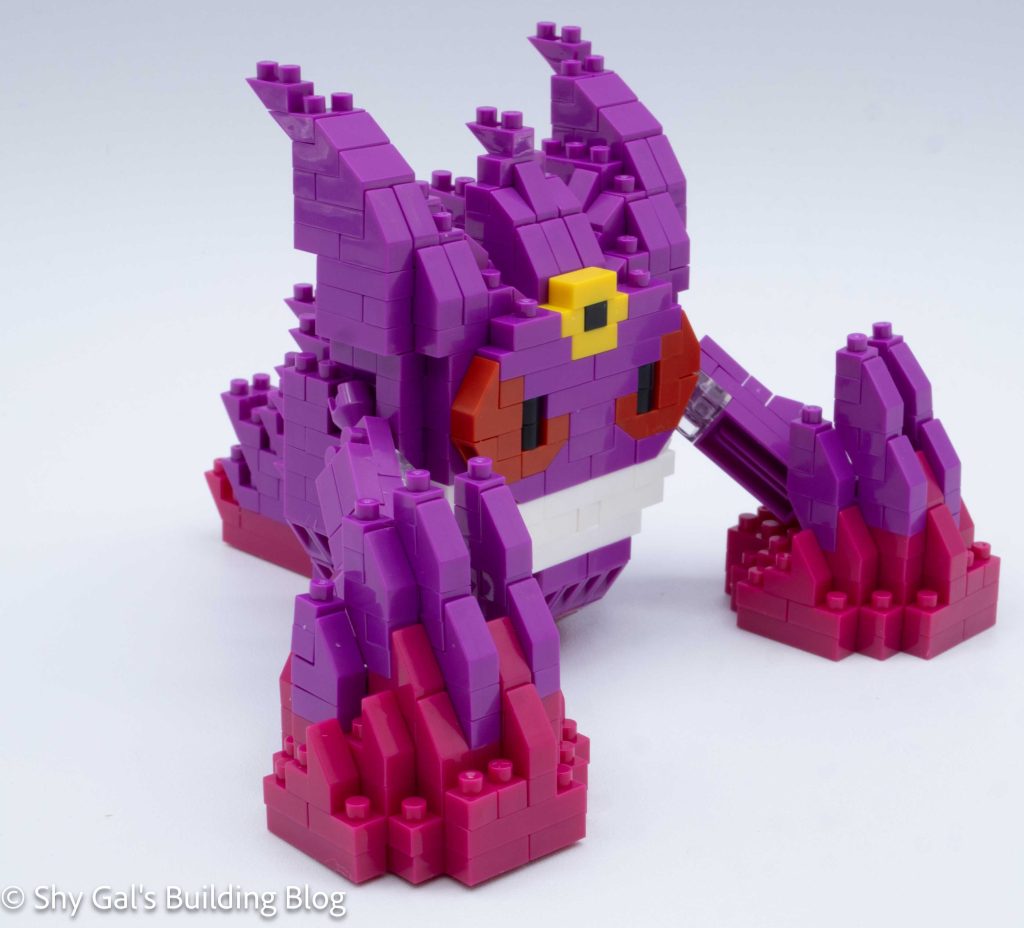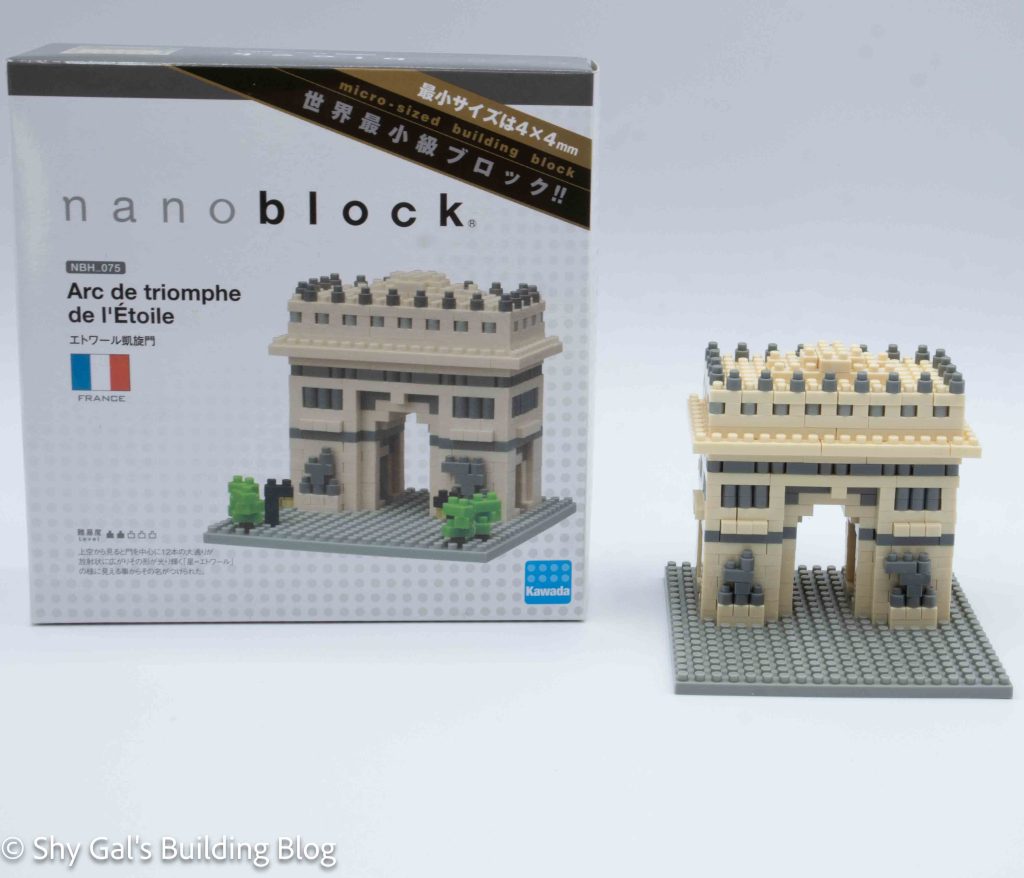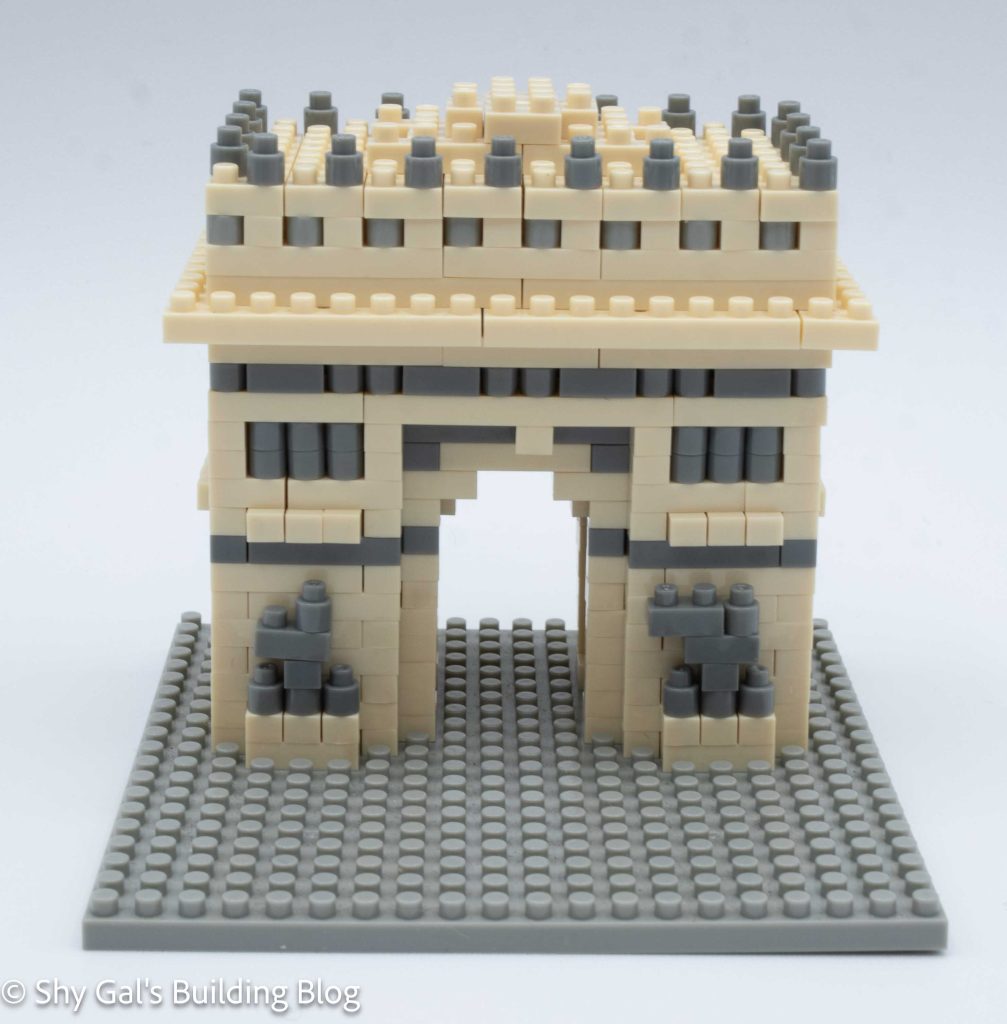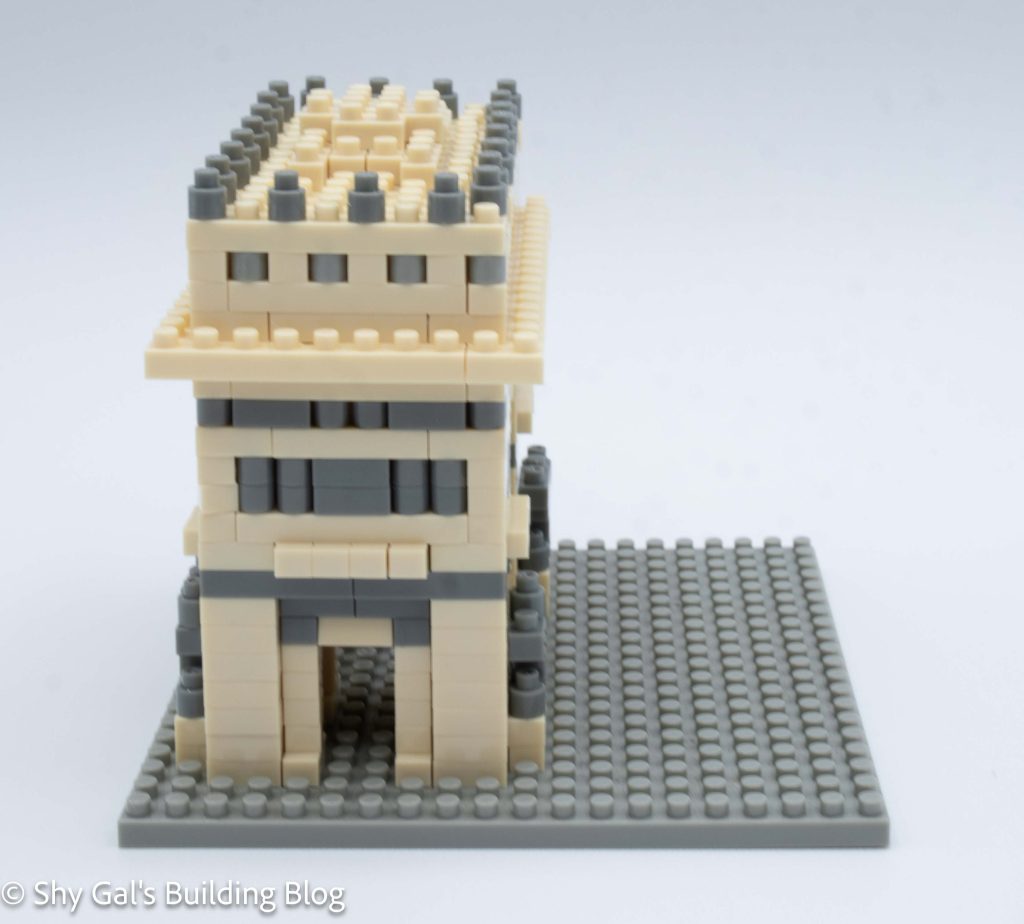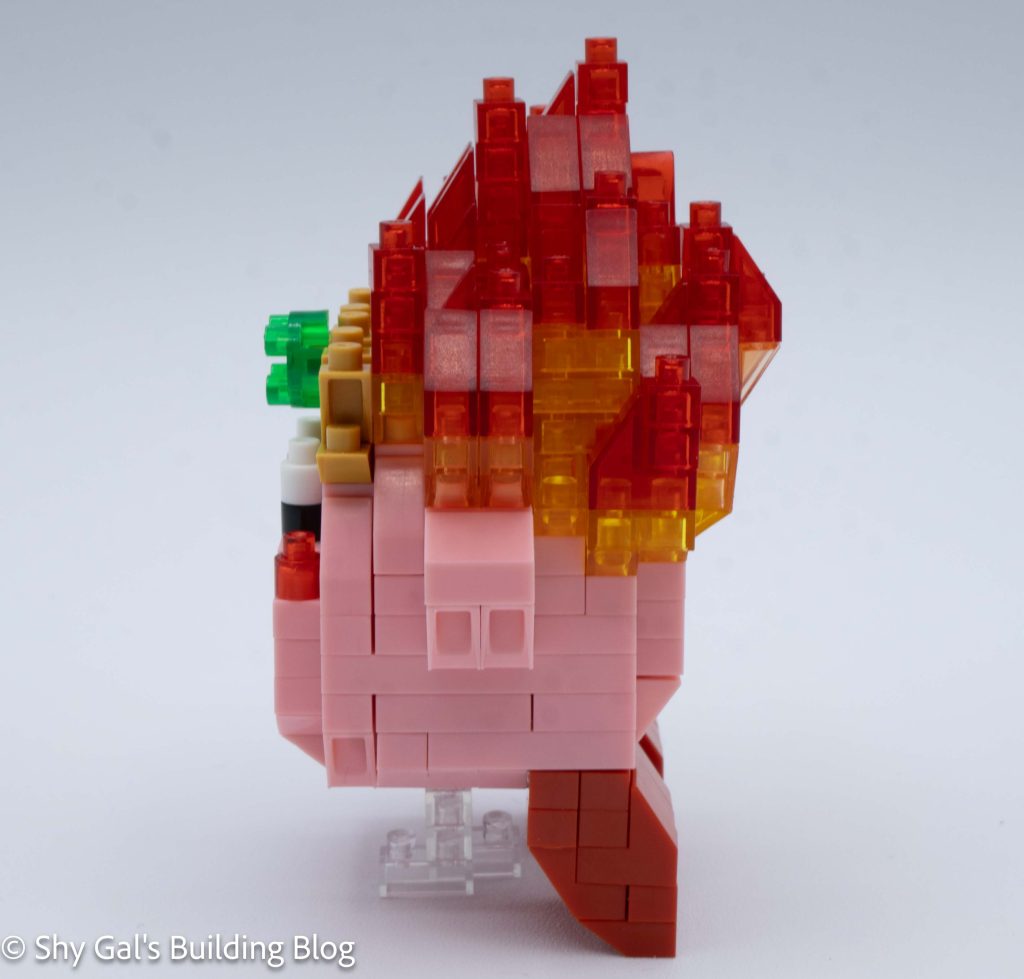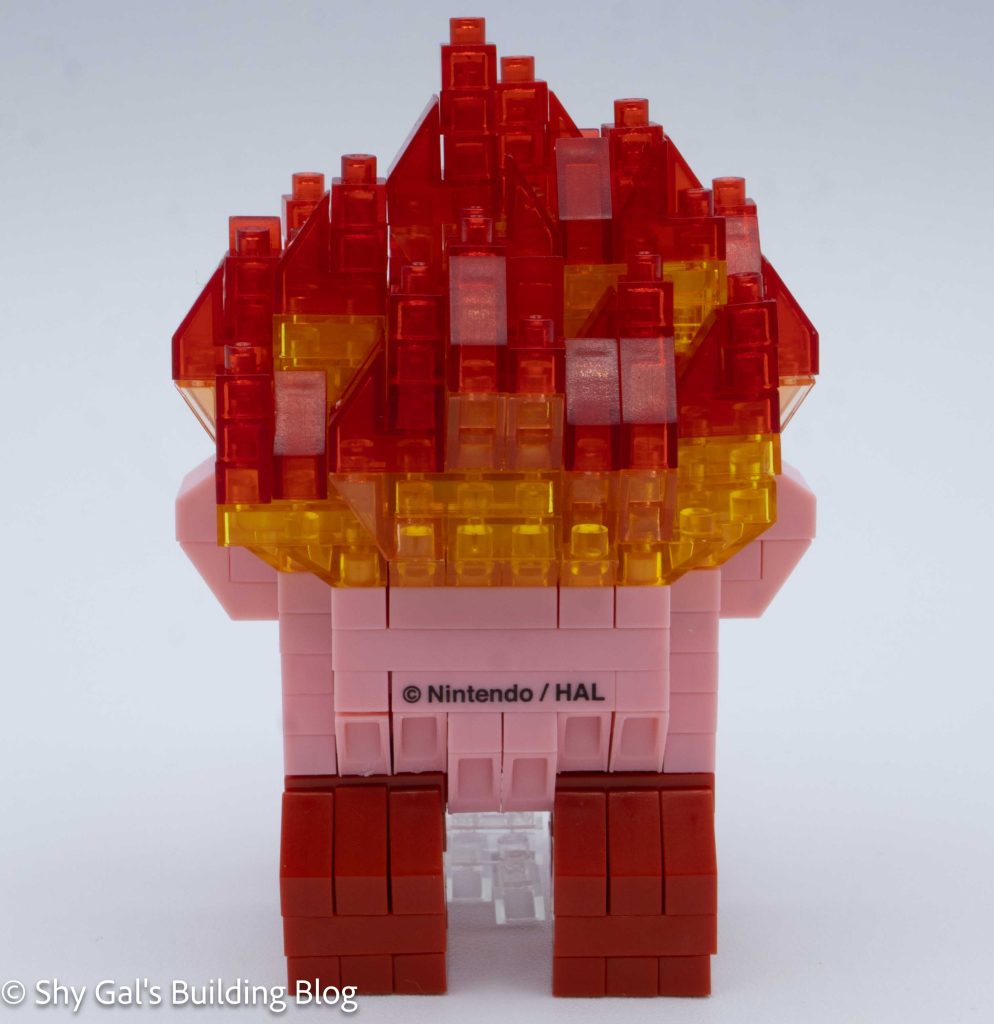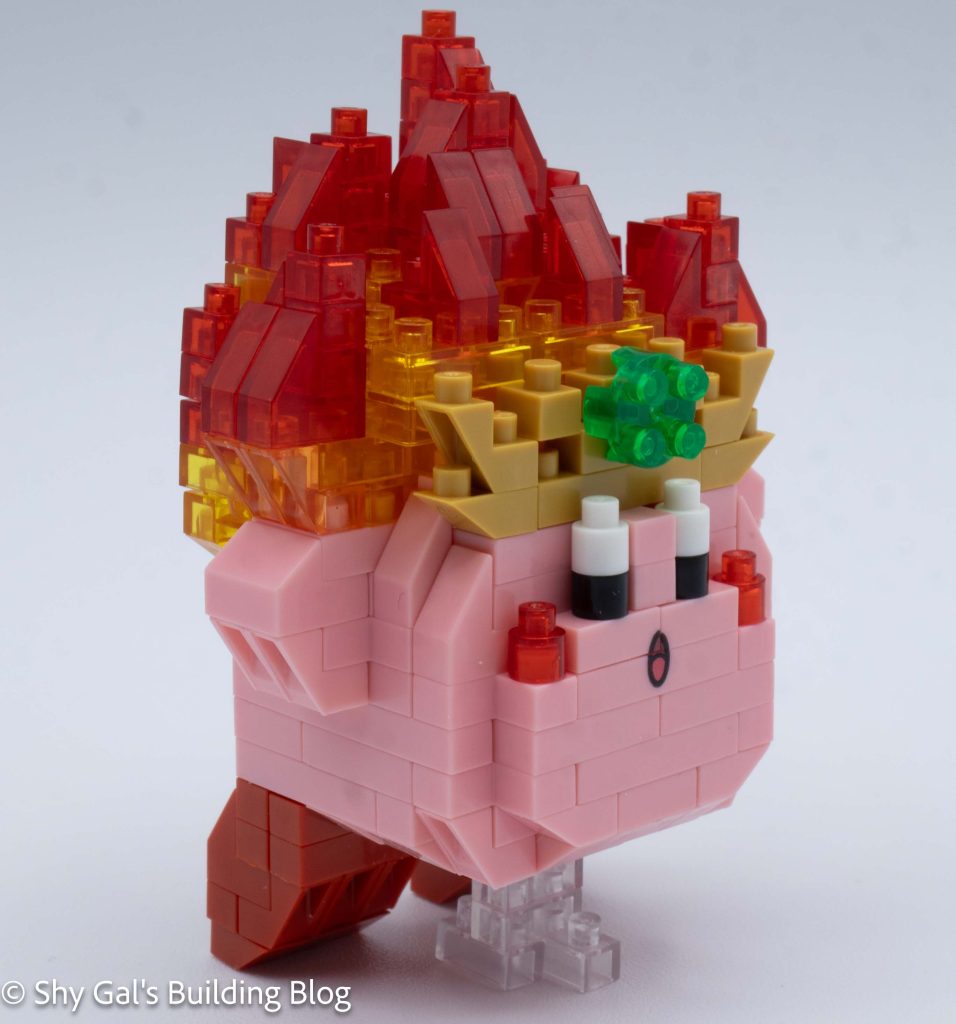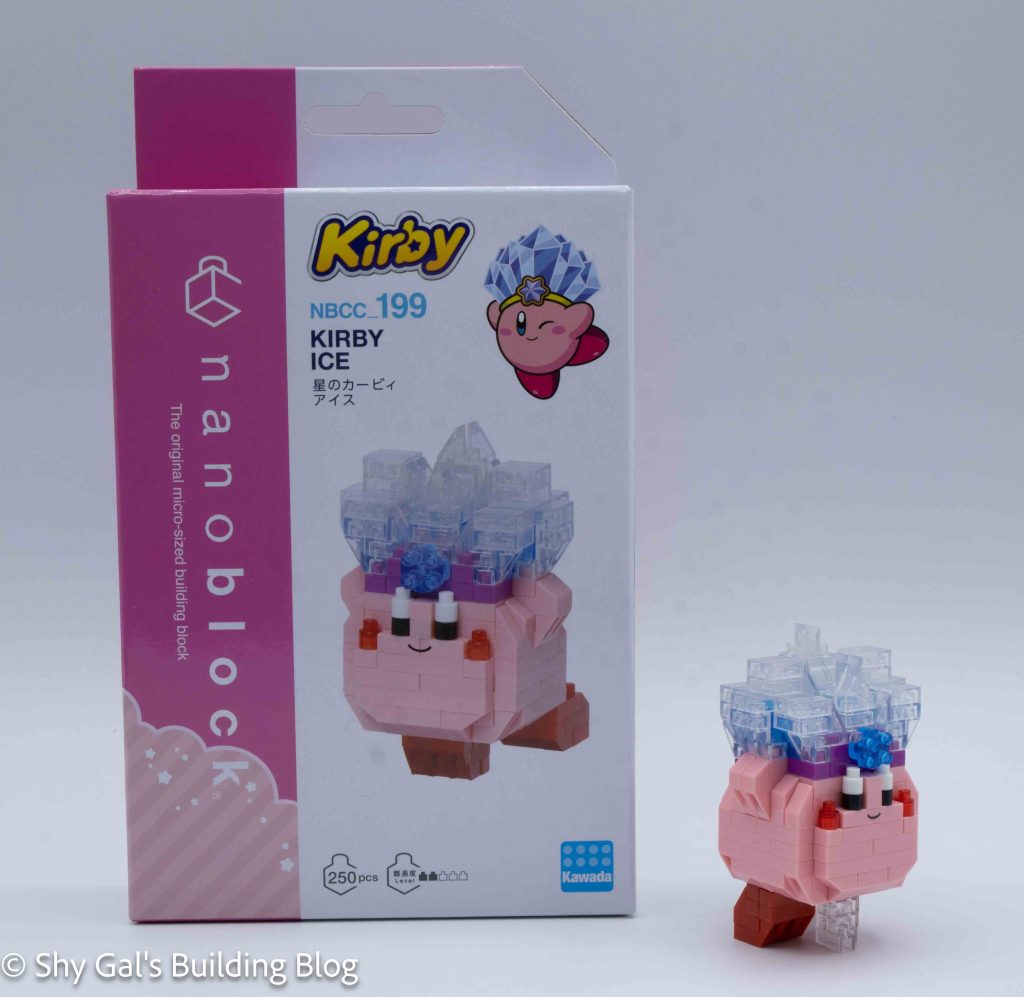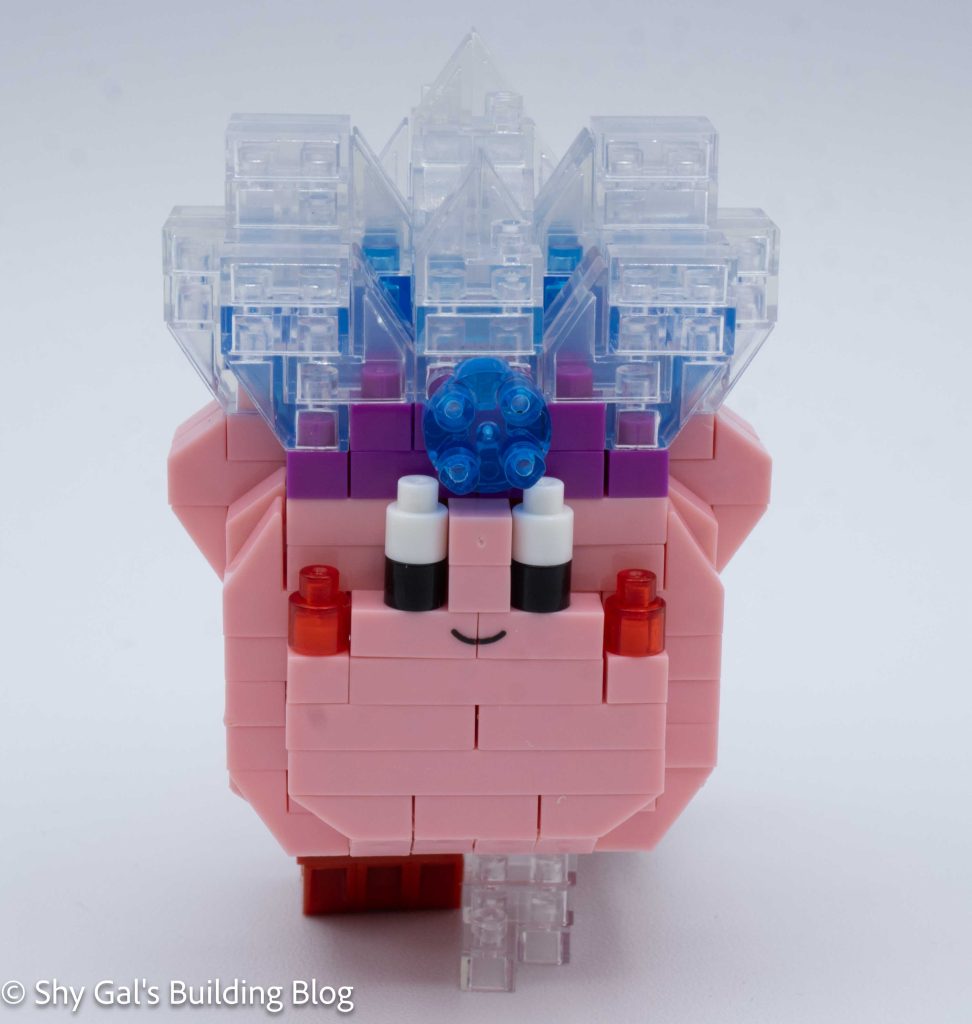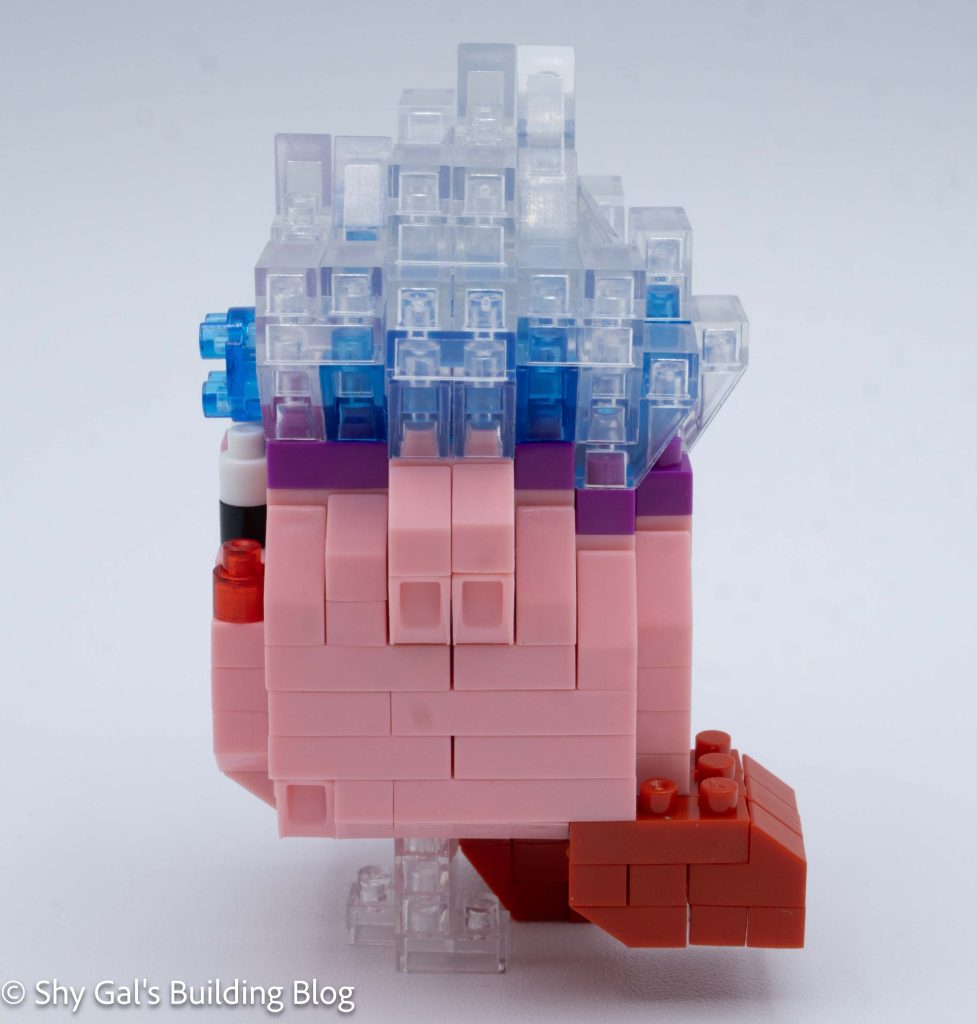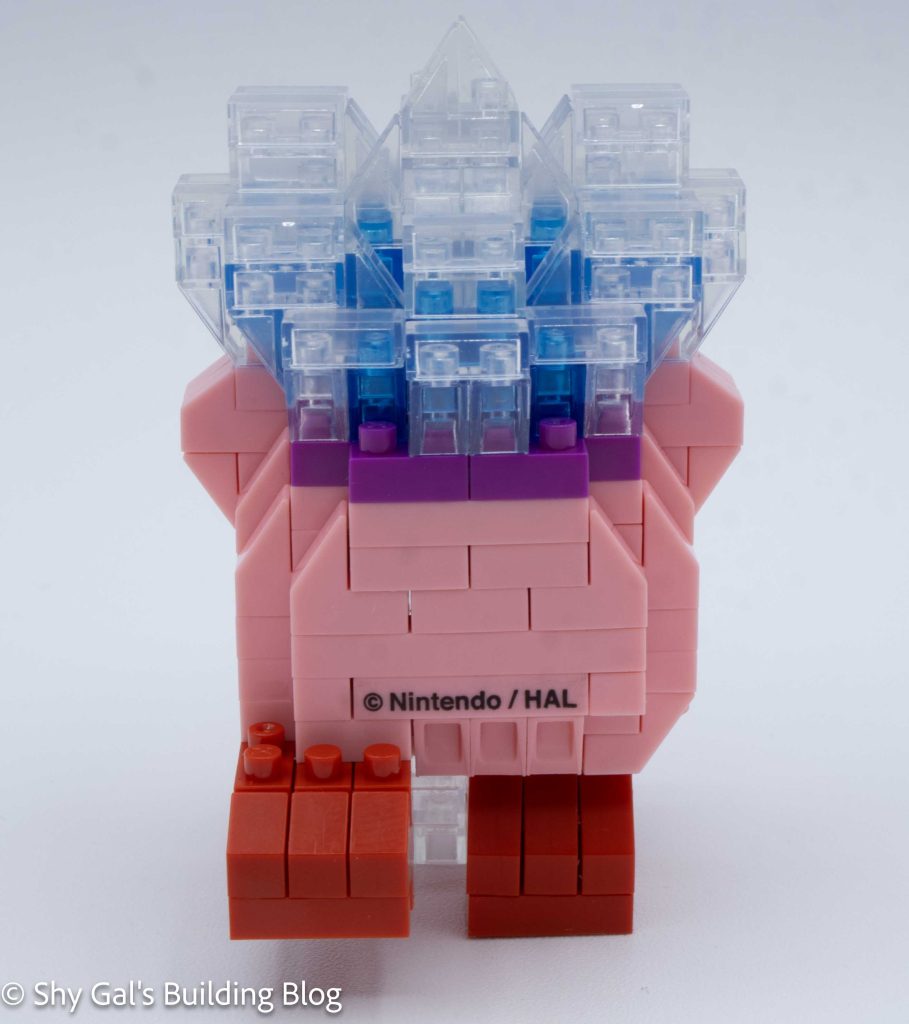
This post is a review of the nanoblock Kirby Inhale build. Kirby Inhale is part of the nanoblock Character collection. Wondering what else is part of the Character collection? Click here for a list.
Number: NBCC_162
Number of Pieces: 200
Difficulty Rating: 2/5
The build begins with building out the base layer of Kirby over 4 steps. This includes the bottom of the mouth and the top of Kirby’s shoes.
Kirby goes up in layers around the outside and builds the back of Kirby’s mouth.
After several layers, Kirby is closed up.
Next, Kirby’s top is built. This includes the arms, cheeks, and eyes.
The next step is to build Kirby’s shoes. Then Kirby is rounded out on the bottom.
The final step is to build it to build the stand so that Kirby doesn’t fall over.
Things I liked:
I really like the use of the multiple shades of red to create the inside of Kirby’s mouth
Things I didn’t like:
I don’t have any real complaints about this build. It was very simple
This post is a review of the nanoblock Brandenburger Tor build. Brandenburger Tor is part of the nanoblock Sights to See collection. Wondering what else is part of the Sights to See collection? Click here for a list.
Number: NBH_031
Country: Germany
Difficulty Rating: 3
The Brandenburger Tor is also known as the Brandenburg Gate. It’s in Berlin, Germany.
This kit is split into 3 sections. There is the main body, roof, and details.
The main body is the structure holding up the gate’s roof. It begins with laying bricks out on a 20×20 plate.
The structure goes up in very straightforward layers. Due to the size of each step I placed a counter on the step I was on to make sure I didn’t try to add in extra steps. As I neared the end of the structure, keeping everything straight was a bit of a challenge because the columns had gotten so tall.
After building the main structure, set it aside to begin working on the roof. The roof began with 9 long pieces all lined up next to each other. I wanted to make sure things were lined up properly, so I used my nanoblock pad.
After getting the first step tied together in the second step, the rest of the roof is fairly straightforward. There is a direction that is a bit hard to follow because it is creating an overhang but once I got the first piece lined up, the rest fell into place fairly quickly.
Next, attach the roof to the main structure.
The final set of steps is to add all the details.
The first set of details is the statue at the top of the gate. I found these directions to be very cramped and hard to read. I even missed some bricks that I was supposed to place and needed to go back and reread the directions. I was eventually able to figure it out.
The kit also comes with bricks to add nanoids and trees to the build. I didn’t add the nanoids because I don’t think they would fit properly to scale. I didn’t add the trees because I looked online, and the Brandenburg Gate doesn’t have any visible trees nearby. There are some gardens, which may be what nanoblock was going for. I feel that neither the nanoids nor trees added to the build in any meaningful way and were not to scale.
Things I liked:
Although it isn’t accurate to the actual gate, I really like how the different colors used in this build look in combination
Things I didn’t like:
I felt the directions for the roof details were difficult to read
I don’t like when extra stuff is added to the build just because especially when it isn’t to scale
This post is a review of the nanoblock Kirby Sleep build. Kirby Sleep is part of the nanoblock Character collection. Wondering what else is part of the Character collection? Click here for a list.
Number: NBCC_161
Number of Pieces: 160
Difficulty Rating: 2/5
This kit begins with creating Kirby’s base. Over the first three steps, the entire base is created.
Step 4 adds the custom-printed face when the next layer is added.
Then, I began to build the hat from the back. Starting at that point, Kirby ends and the hat begins.
The hat was a little tricky because of all the slanty pieces. I needed to be careful to use the correct slanty pieces, which changed every brick. Other than the slanty pieces, the hat was pretty straightforward.
Then I flipped Kirby upside down to add the details to round out his bottom.
Next the tassel to the hat was added.
The final step is to build and add Kirby’s feet.
Things I liked:
I like the hat I feel that it looks like fabric
Things I didn’t like:
I didn’t find the instructions for adding the feet very clear
This post is a review of the nanoblock The Parthenon build. The Parthenon is part of the nanoblock Sights to See collection. Wondering what else is part of the Sights to See collection? Click here for a list.
Number: NBH_066
Country: Greece
Difficulty Rating: 3/5
The instructions for this kit include several nanoids all around the base. I didn’t include them in my build because they don’t really fit the scales of the rest of the build.
For me, the trickiest part was keeping track of all the pieces. I normally build on a tray balanced on my lap. This kit had a ton of round pieces, so every time I sifted, the round bricks would roll all over the tray.
This is a large NBH build because it is built on 2 20×20 plates, whereas most kits have only one plate.
The build begins by outlining the base of The Parthenon. This step also connects the 2 base plates. There is some rubble scattered around the build as well.
The next couple of steps is to build the actual base of The Parthenon. There appear to be steps going all around the building. Two 10×10 plates are used to create the base at the top of the platform.
The next couple of steps are to create the ruin of a building that used to stand on top of the base. I’m not sure how accurate the building is because the only photos I can find appear to be only walls, while the nanoblock build appears to have a roof.
The next step is to create all the columns around the outside of the building. There are columns on all four sides. I like that there is some slight variation of the columns by adding cream and gray bricks to the columns instead of having them just be white. After all the columns are all, each section has a bit where the column connects to the roof.
Overall, I feel that the build has a feeling of the Greek ruins, but I’m not sure that it’s accurate enough I would recognize it as The Parthenon.
Things I liked:
I like how the additional colors break up the white in the columns. I wish there had been more of this in the build
Things I didn’t like:
I’m not sure how recognizable it is as The Parthenon, but it looks more like a generic ruin to me
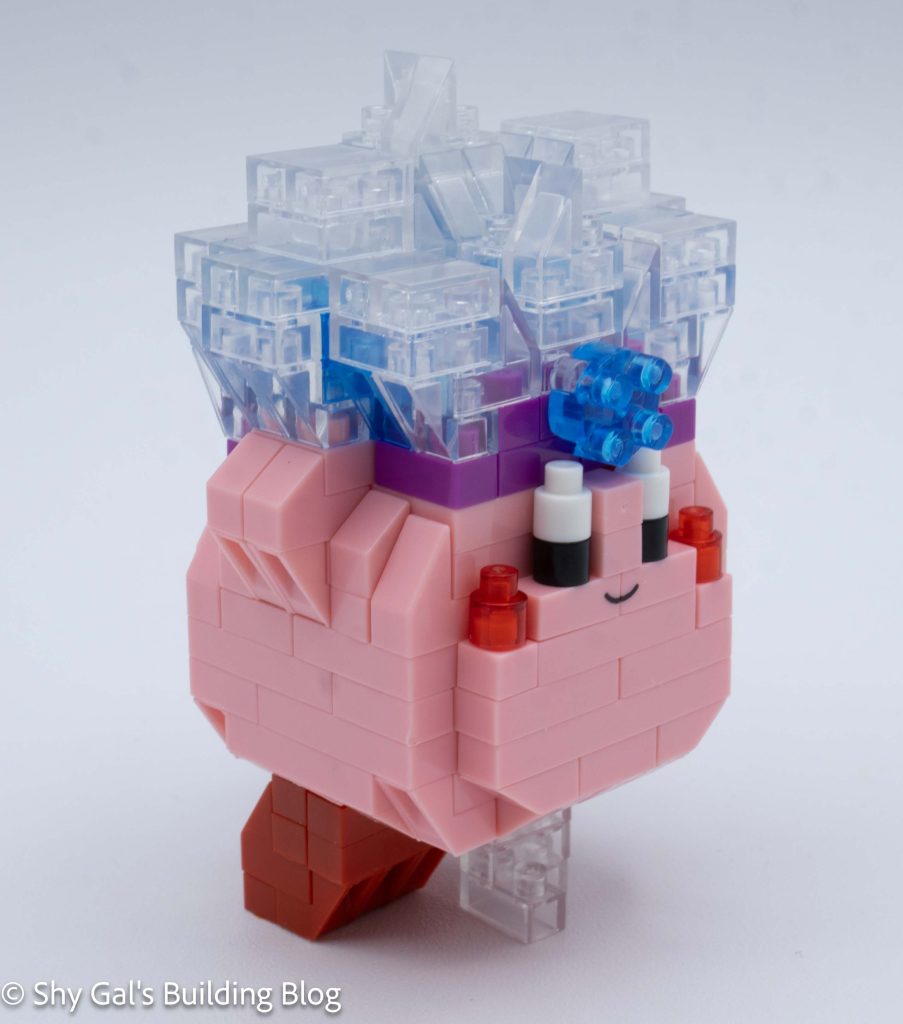
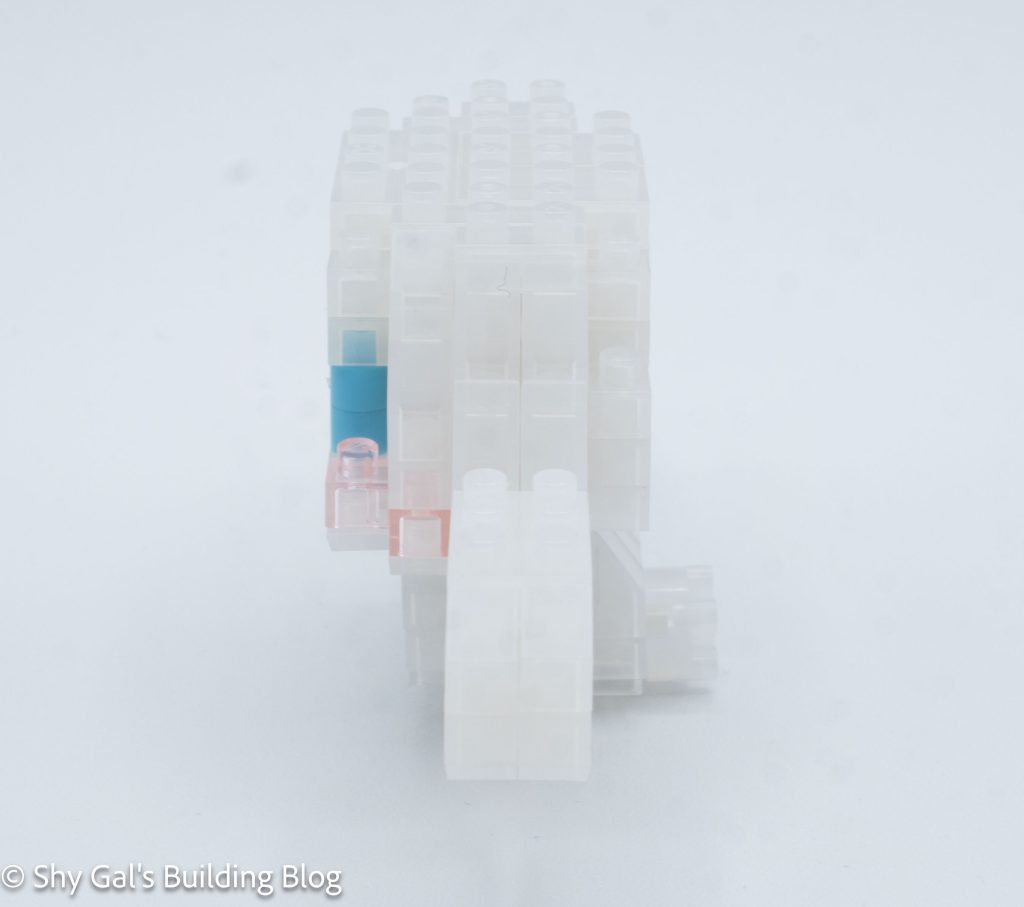
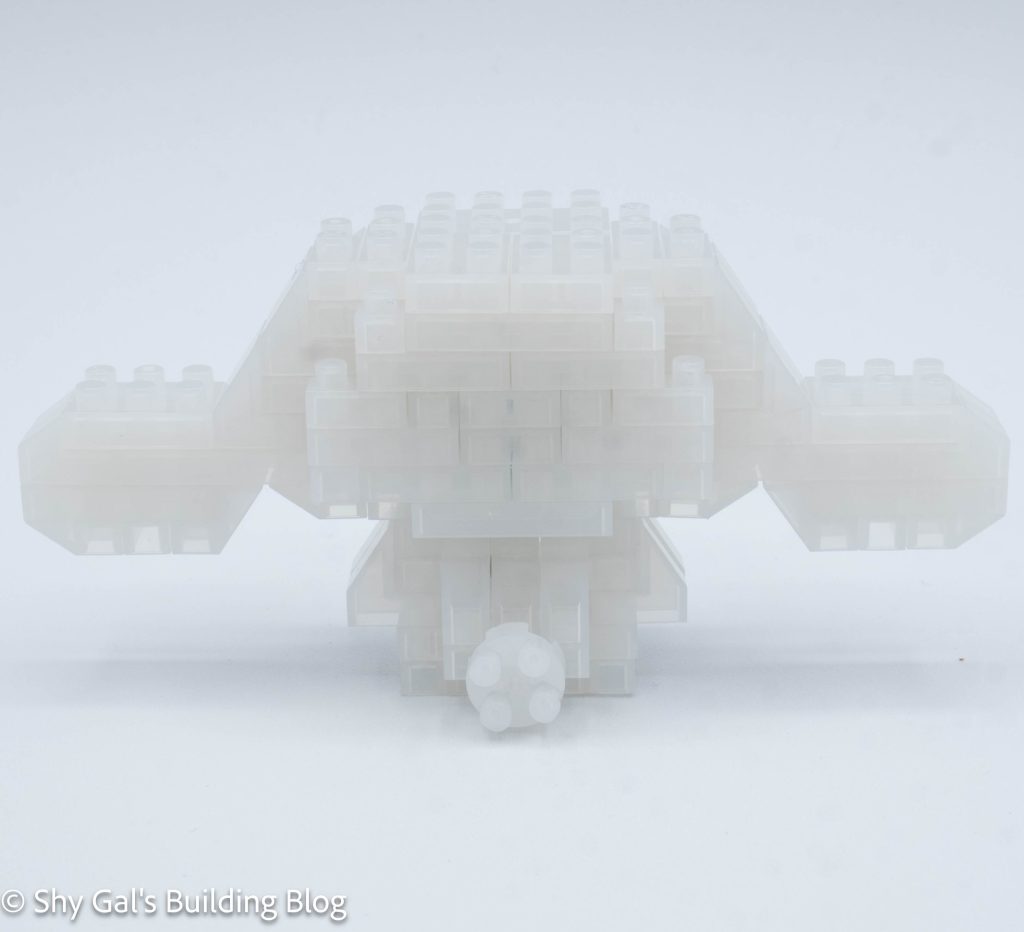
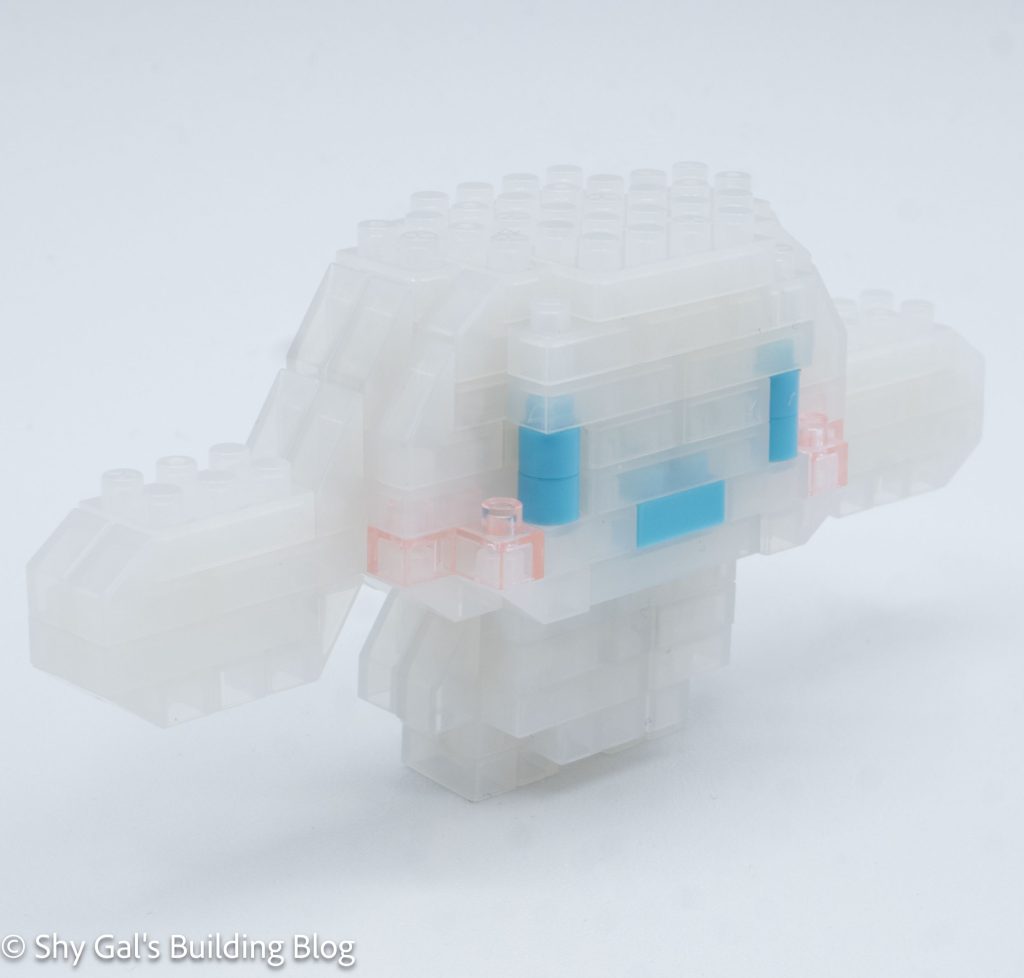
This post is a review of the nanoblock Kirby Clear Version build. Kirby Clear Version is part of the nanoblock Character collection. Wondering what else is part of the Character collection? Click here for a list.
Number: NBCC_160
Number of Pieces: 220
Difficulty Rating: 2/5
This kit is identical to NBCC_140, except it is made of clear bricks. Finding the correct bricks to use was a bit more difficult because the light pink and clear looked very similar, even on my white-backed tray.
This build is made up of 3 sections. There is Kirby, the star, and the stand.
Kirby begins by making a base in pink bricks. Then, the feet are added to the base. After that, Kirby begins going up in layers. Overall, things are fairly straightforward. In the step that adds Kirby’s mouth, I didn’t understand from the instructions that there was a custom piece with the mouth printed. Once I found the piece, the only other concern was the slanted pieces.
Kirby has 2 different slanted pieces. I appreciated that the colors in the instructions were different enough that it was very clear when to use which slanted piece.
The final step to building Kirby is to finish his hand and smooth out the top of his head.
The star is created by several layers of yellow bricks with a width of 2, so the final build is 2 bricks tall. The first step creates a gap in the 2 depth. I wasn’t sure why there was a gap, but it became clear when I put the sections together. The second step adds the socket of the ball joint, which is needed to connect the star to the stand.
After adding the socket, the rest of the star is fairly straightforward until the final step. There are 2 notable things about the final step. First, there is a custom-printed brick. I think it is for copyright, but I’m not sure for what exactly. Secondly, it wasn’t clear that it mattered what order sections were added. It was pretty easy to fix when I realized the order did matter.
Kirby sits on studs that point out the star, so he is very stable.
The stand is fairly straightforward. It begins by building up several layers of clear bricks. After building the layers, some additional bricks are added to the bottom layer. The stand is then laid on its side so the ball joint is up in the air.
Kirby’s star attaches to the ball joint on the stand. The part sticking up above the joint goes into the hole in the star to allow the star to sit at an angle.
Things I liked:
I really like how the final build turned out, and it was worth all the work to find the bricks
Things I didn’t like:
I didn’t like how hard it was to tell pink from clear on my building tray and how much digging I had to find the right piece
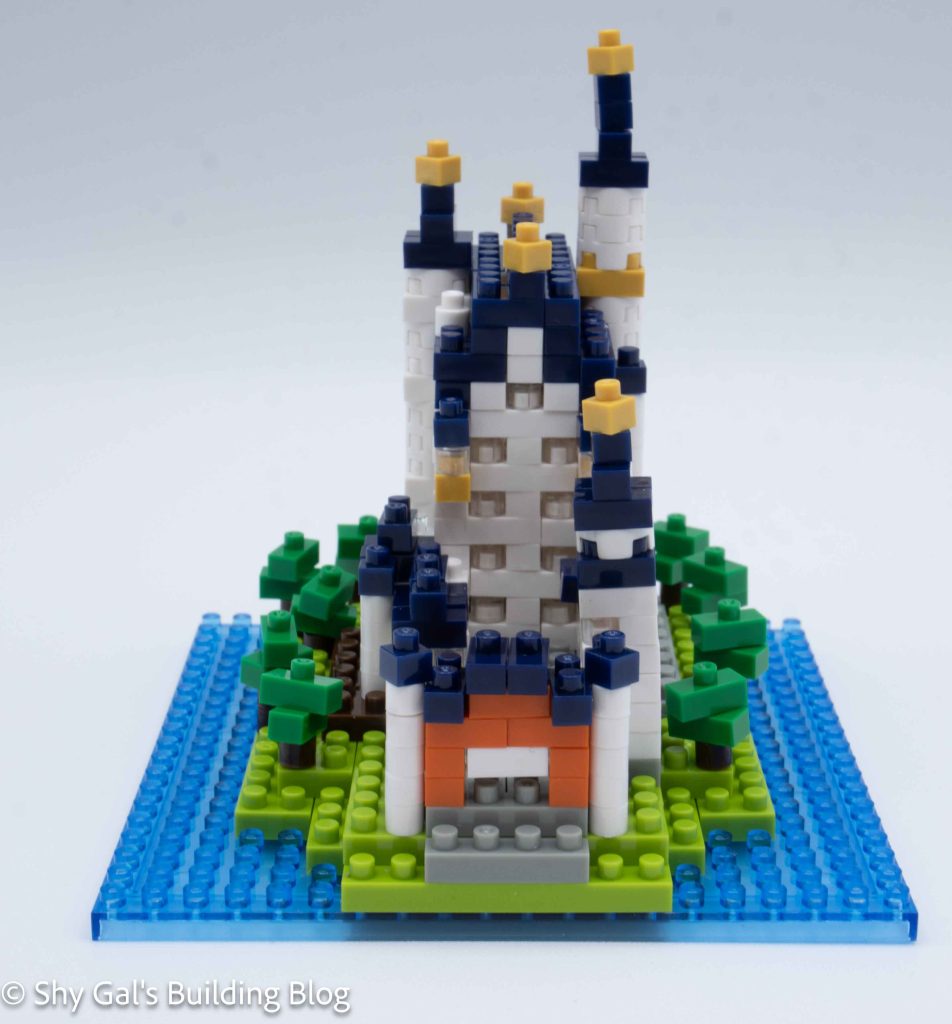
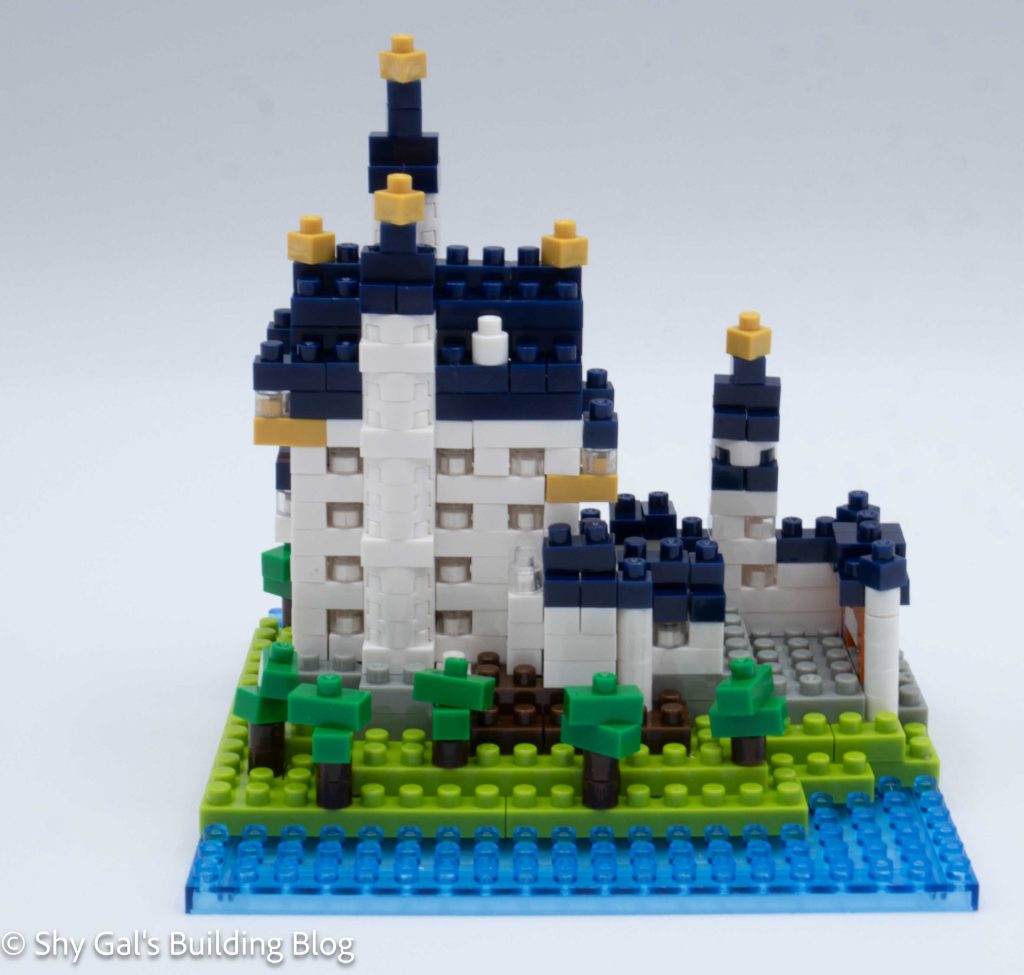
This post is a review of the nanoblock Mont-Saint-Michel build. Mont-Saint-Michel is part of the nanoblock Sights to See collection. Wondering what else is part of the Sights to See collection? Click here for a list.
Number: NBH_012
Country: France
Difficulty Rating: 3
Mont-Saint-Michel is an island off the coast of Normandy, France. It looks like a walled city.
The build begins with outlining the island on a 20×20 clear blue baseplate. The next few layers are rings that make the outline smaller. Then, the ring is closed off by placing a 10×10 plate in the center of the ring.
There are a couple more layers until there is another unique placement. A brick is placed at an angle. The studs on the layer below are properly placed so that when the angled brick is placed, the brick is sturdy.
The rest of the build is very straightforward, going up in layers.
Things I liked:
I like the use of clear blocks creating gaps and windows
Things I didn’t like:
I’m not sure what the one random yellow brick at the top of the spire is supposed to be
This post is a review of the nanoblock Kirby build. Kirby is part of the nanoblock Character collection. Wondering what else is part of the Character collection? Click here for a list.
Number: NBCC_141
Number of Pieces: 220
Difficulty Rating: 2/5
This kit is identical to NBCC_140 without the 30th sticker. There is also a clear version number, NBCC_160.
This build is made up of 3 sections. There is Kirby, the star, and the stand.
Kirby begins by making a base in pink bricks. Then, the feet are added to the base. After that, Kirby begins going up in layers. Overall, things are fairly straightforward. In the step that adds Kirby’s mouth, I didn’t understand from the instructions that there was a custom piece with the mouth printed. Once I found the piece, the only other concern was the slanted pieces.
Kirby has 2 different slanted pieces. I appreciated that the colors in the instructions were different enough that it was very clear when to use which slanted piece.
The final step to building Kirby is to finish his hand and smooth out the top of his head.
The star is created by several layers of yellow bricks with a width of 2, so the final build is 2 bricks tall. The first step creates a gap in the 2 depth. I wasn’t sure why there was a gap, but it became clear when I put the sections together. The second step adds the socket of the ball joint, which is needed to connect the star to the stand.
After adding the socket, the rest of the star is fairly straightforward until the final step. There are 2 notable things about the final step. First, there is a custom-printed brick. I think it is for copyright, but I’m not sure for what exactly. Secondly, it wasn’t clear that it mattered what order sections were added. It was pretty easy to fix when I realized the order did matter.
Kirby sits on studs that point out the star, so he is very stable.
The stand is fairly straightforward. It begins by building up several layers of clear bricks. After building the layers, some additional bricks are added to the bottom layer. The stand is then laid on its side so the ball joint is up in the air.
Kirby’s star attaches to the ball joint on the stand. The part sticking up above the joint goes into the hole in the star to allow the star to sit at an angle.
Things I liked:
The custom brick for Kirby’s mouth because it means there isn’t a sticker for the mouth
How Kirby sits at an angle on his star ride
Things I didn’t like:
It was really hard to tell about the special brick that had Kirby’s mouth was a special brick
This post is a review of the nanoblock Streets of Gion build. Streets of Gion is part of the nanoblock Sights to See collection. Wondering what else is part of the Sights to See collection? Click here for a list.
Number: NBH_126
Country: Japan
Number of Pieces: 390
Difficulty Rating: 3/5
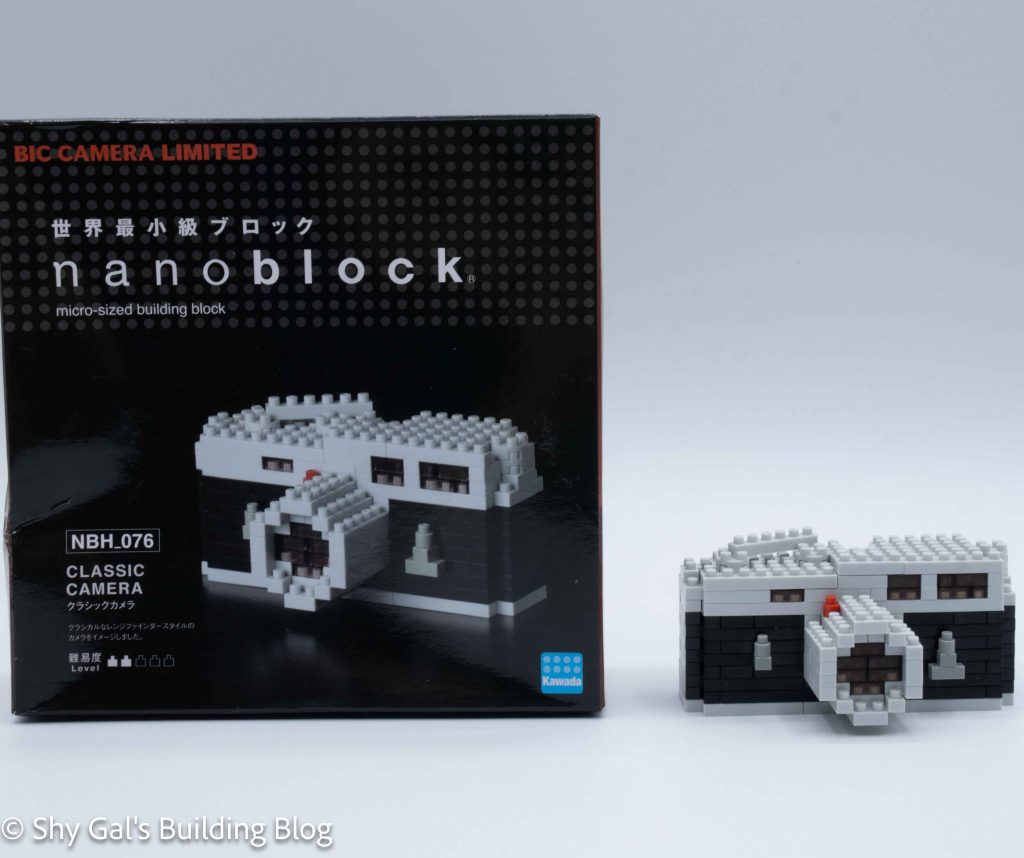
This kit is labeled as Bic Camera Limited. Bic Camera is a shop in Japan, so I’m guessing the set was only available there.
Gion is a region of Kyoto that is famous for having geisha. This build includes 2 nanoids that have white faces like the geisha would have when they go out in public. I did include the nanoids because I could tell they were on a similar scale to the buildings in the background.
I bought this kit used so all the bricks were combined into 1 large ziplock bag. This kit uses several shades of brown, gold, and yellow. It was very difficult to tell which brown to use. I looked at the photos on the box to decide which color to use and when.
The build begins by laying out bricks on the clear blue 20x2o base plate. The next few layers add bricks all around the base, creating the nanoids, the bridge, and the foundation of the buildings.
The next step is to build the building. The two buildings are built in parallel and go up in layers. One building is blue and gold. The other building is brown and gold, and it was difficult to figure out the right colors.
Then, some details are added to the front of the build, including the trunk of the tree.
The final step is to build the top of the tree. There are 2 options for coloring. There is a spring version and a fall version. I built the spring version. I had a hard time following the directions and getting the branches correct. I did get a tree top that looked approximately correct, so I attached it to the top of the tree.
Things I liked:
I really like that the nanoids have white faces like geisha
I like that the trees can match the seasons
Things I didn’t like:
I wish the directions for the clear had been clearer for colors and the tree top
This post is a review of the nanoblock Koinobori build. Koinobori is part of the nanoblock Sights to See collection. Wondering what else is part of the Sights to See collection? Click here for a list.
Number: NBH_174
Country: Japan
Number of Pieces: 400
Difficulty Rating: 3/5
This kit was a lot more difficult to build than I had originally suspected. This is because of how the koi kites are built.
The kit begins with the black fish on top. After building the head, a connecter brick is added to the bottom of the fish. Then there are a bunch of steps creating the body of the fish flipping around where the scales are. It was tricky to keep track of which exact step I was on while building the body of the fish since lots of the steps were nearly identical. (It may have been easier if I had used a counter to keep track of which step I was on. Finally, the tail is added.
Then, the next 2 fish are added and chained together using the connection pieces. Overall, each of the fish is built in the same manner to create the scale patterns on the side of the fish.
The next step is to built the base. This was fairly straightforward since other than the pole base, the lone round clear brick, and the bricks holding the plates together it didn’t really matter where grass was added. I do like how the grass hides the other things on the baseplate so it appears the kites are floating.
The next step is to attach the fish to the base plate. I missed there is a 3rd clear brick originally so I needed to add that after adding the pole. Then the pole is attached to the base and the fish are attached to the pole.
Then, the fins on the sides of the fish are added. I needed to be really gentle so that the fish stayed centered.
The final step is to add the pinwheels on the top of the pole.
Things I liked:
I like how the grass hides things on the baseplates, so it looks more like the kites are floating
I like how the finished scales look on the fish. I feel that it catches the effect of the real kites
Things I didn’t like:
I wish the instructions for building the fish had been less cramped. I think it would be easier to keep track of where I was
This post is a review of the nanoblock Rives de la Seine a Paris build. Rives de la Seine a Paris is part of the nanoblock Sights to See collection. Wondering what else is part of the Sights to See collection? Click here for a list.
Number: NBH_004
Country: France
Difficulty Rating: 1
Rives de la Seine a Paris translates to Banks of the Seine in Paris. This build is actually of the Eiffel Tower which is on the Seine.
The build begins with laying out the foundation bricks on the base plate. There are 2 images for how the baseplate should look after step one, which makes me confident I had the scattered bricks placed correctly.
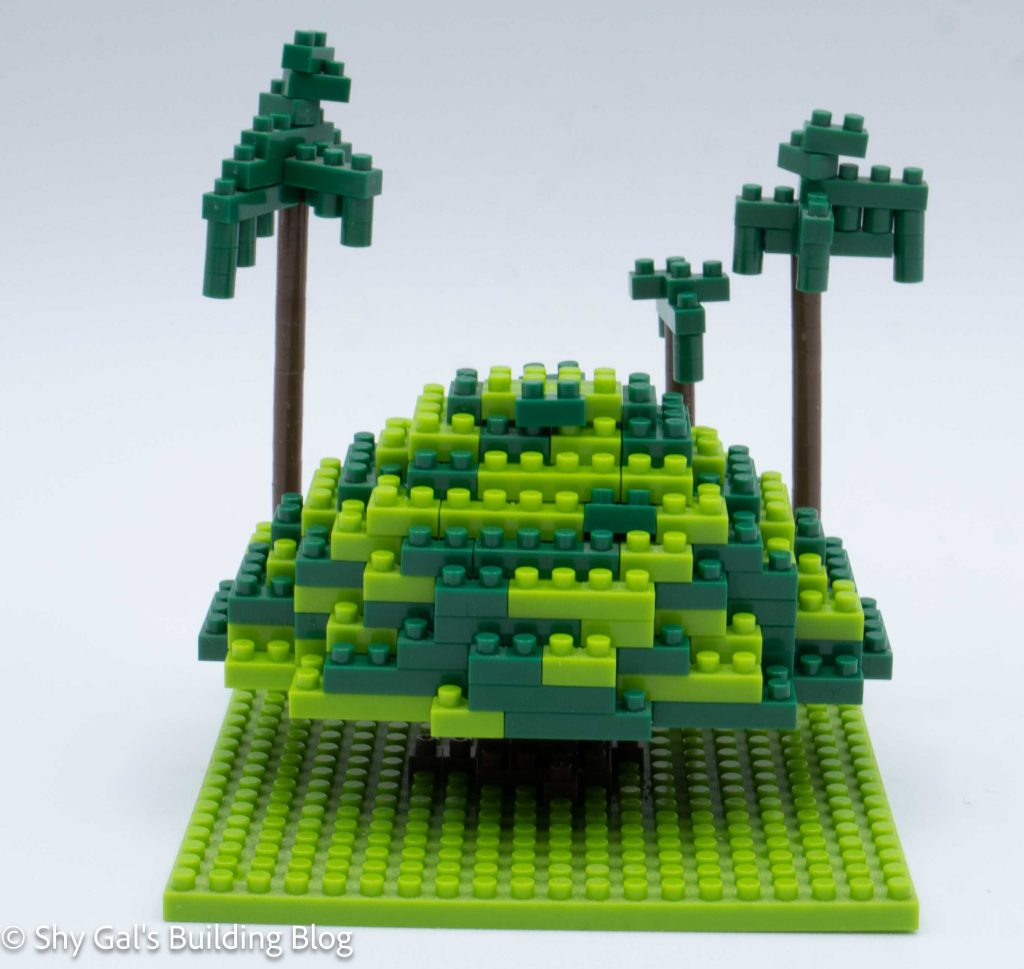
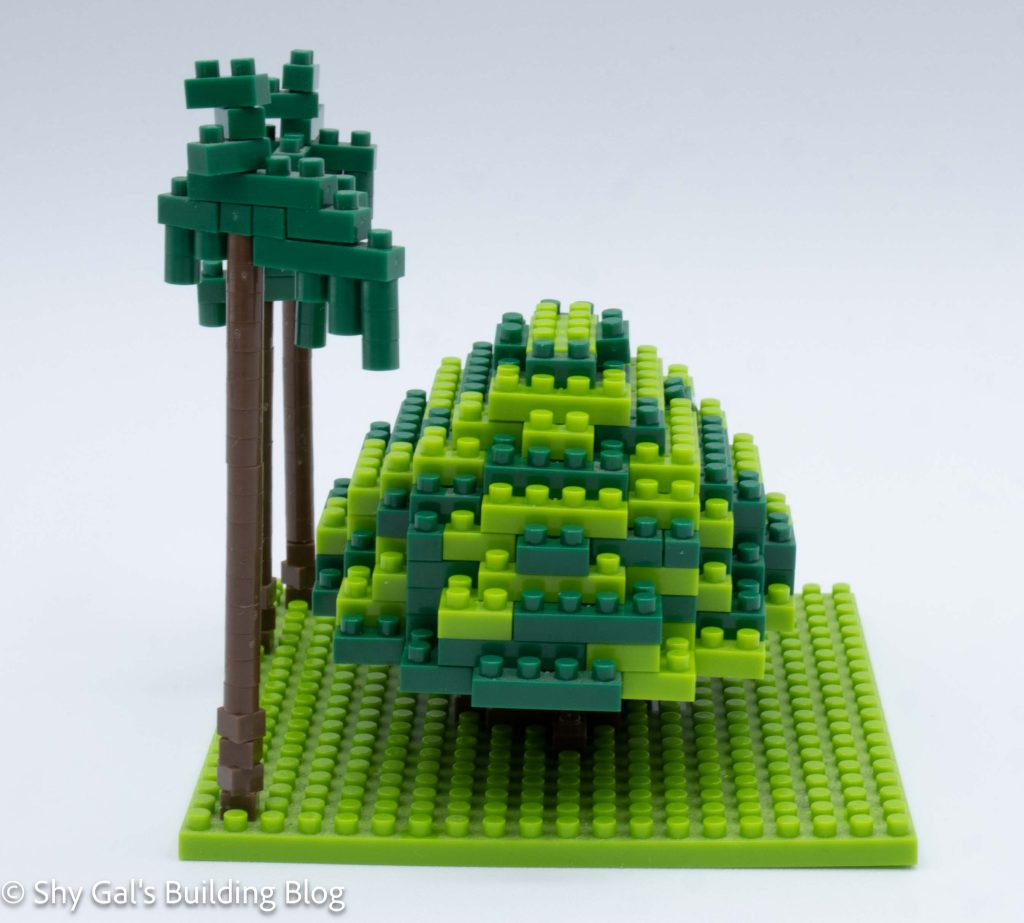
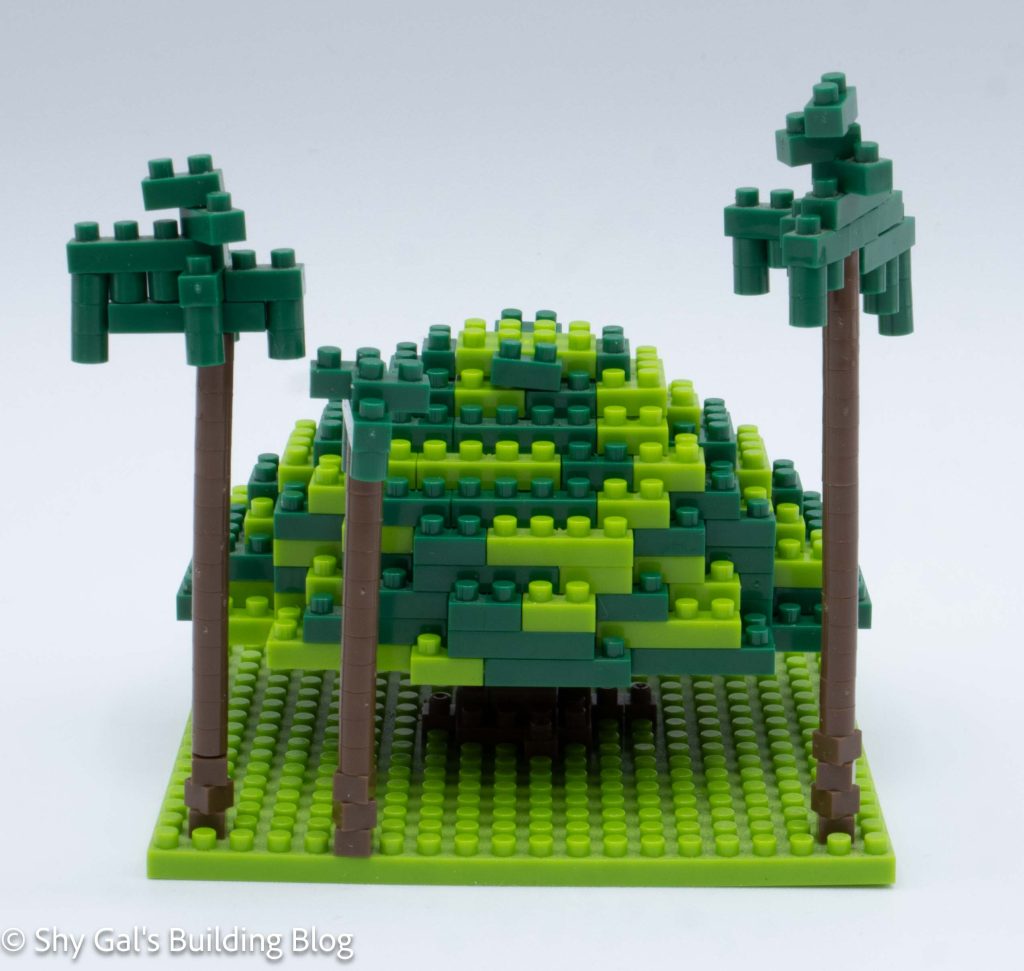
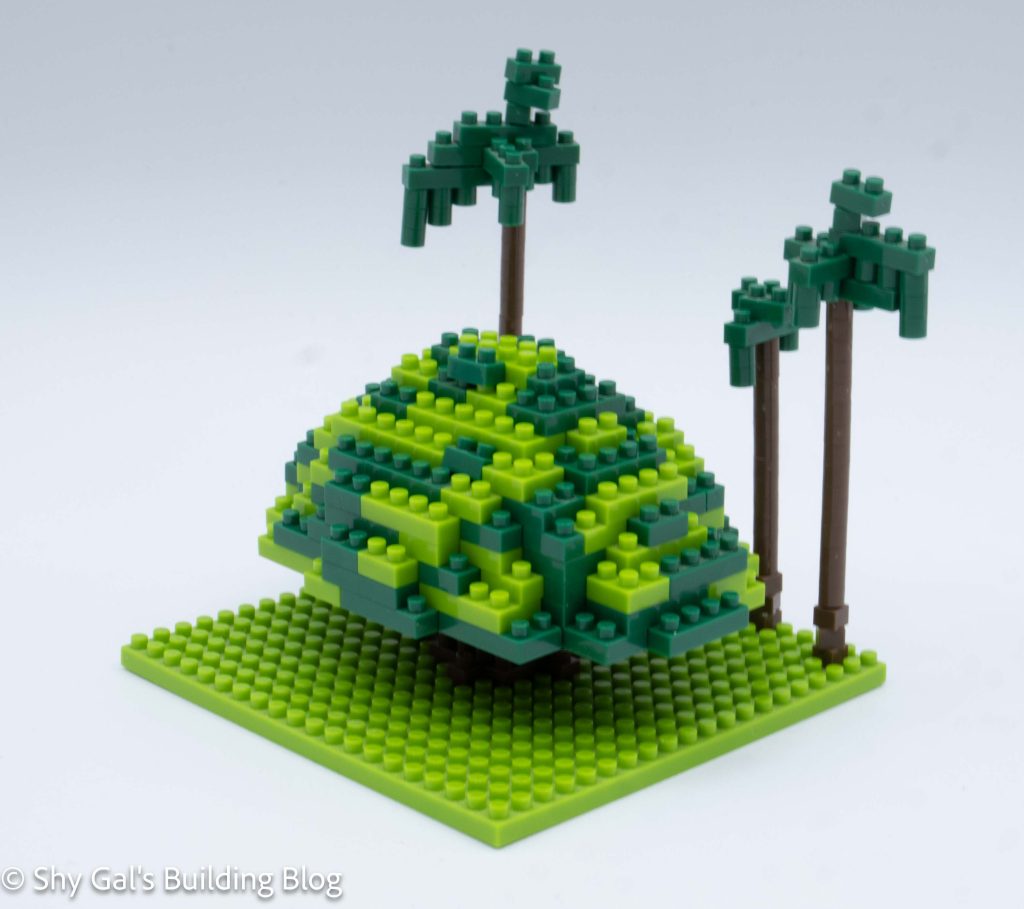
The second step adds the trees and the second layer of bricks to the tower. I wish the trees had been added at the end because I kept knocking the trees as I added to the tower.
Then a smaller base plate is added to the tower to create the first viewing platform. I don’t really notice or see the clear the bricks on the outside of the tower so I’m not sure they add much to the build.
The rest of the tower goes up in very straightforward layers. The layers add the 2 additional viewing platforms and the radio antenna on the top of the tower.
Things I liked:
I like that the base platform appears to be a complete scene instead of having random things as an afterthought because the base is bare
Things I didn’t like:
I wish the trees had been added at the end instead of the beginning because I kept bumping them as I built the tower